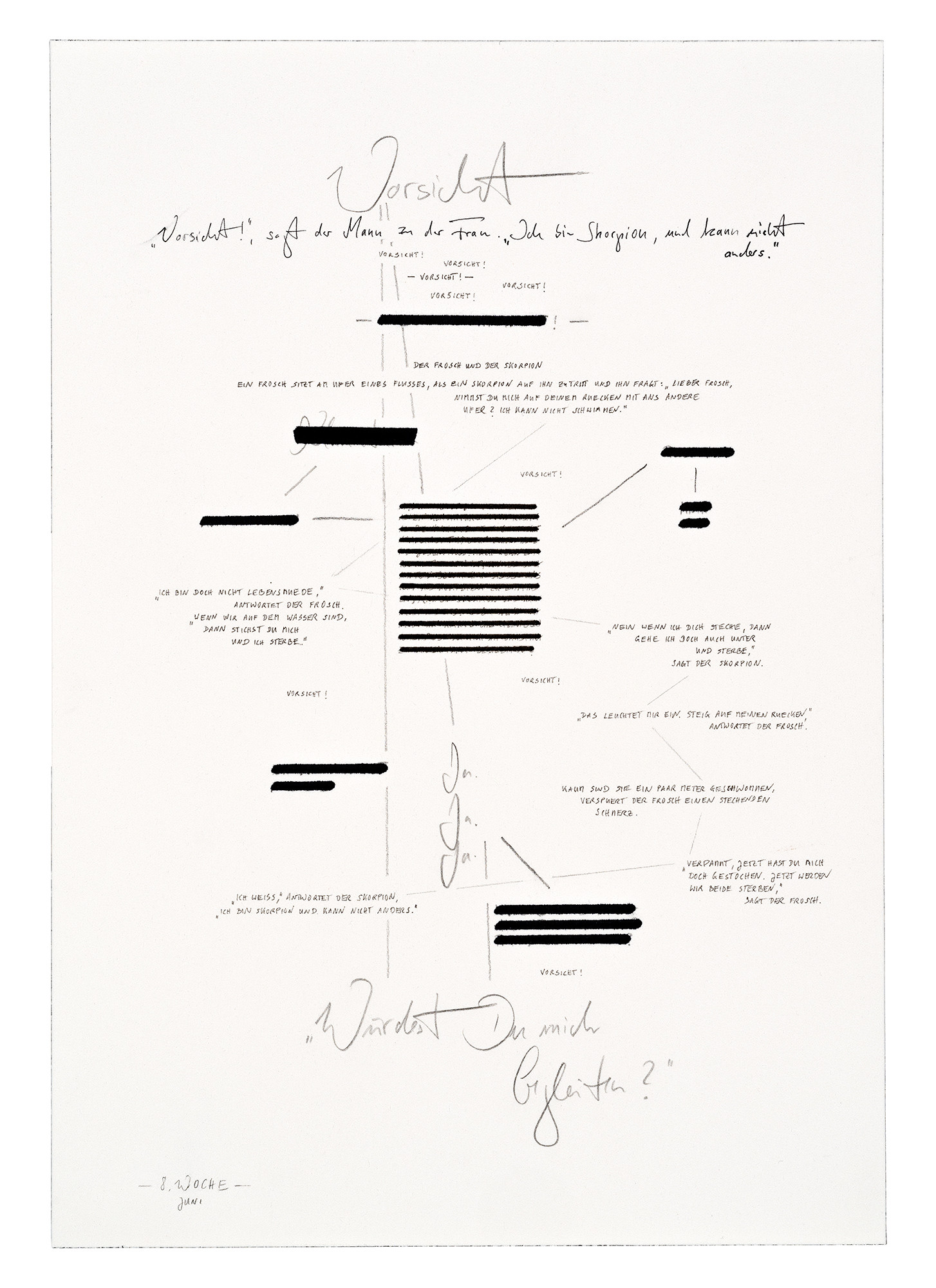
inc and pencil on paper, 26 x 18 cm
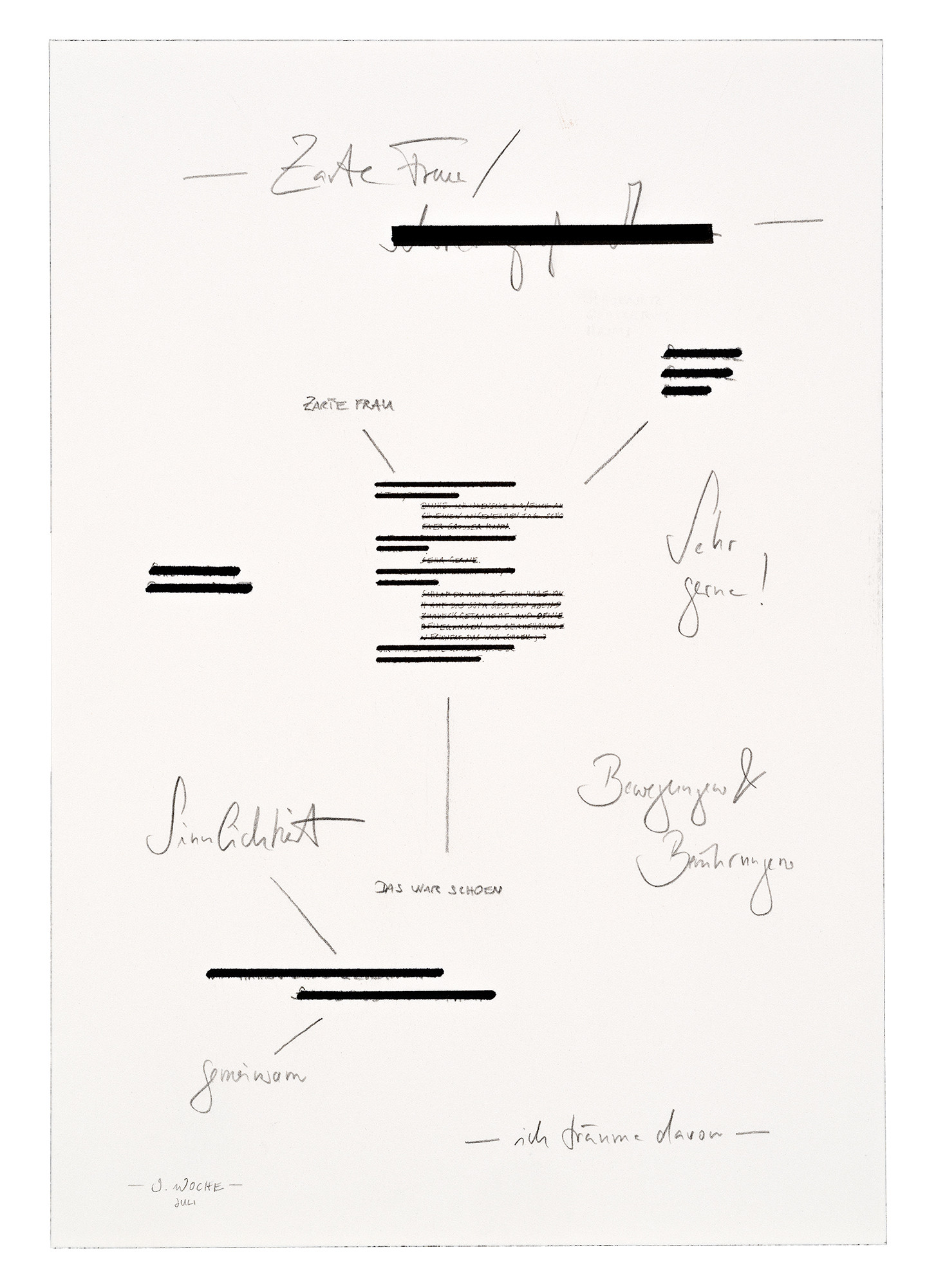
inc and pencil on paper, 26 x 18 cm
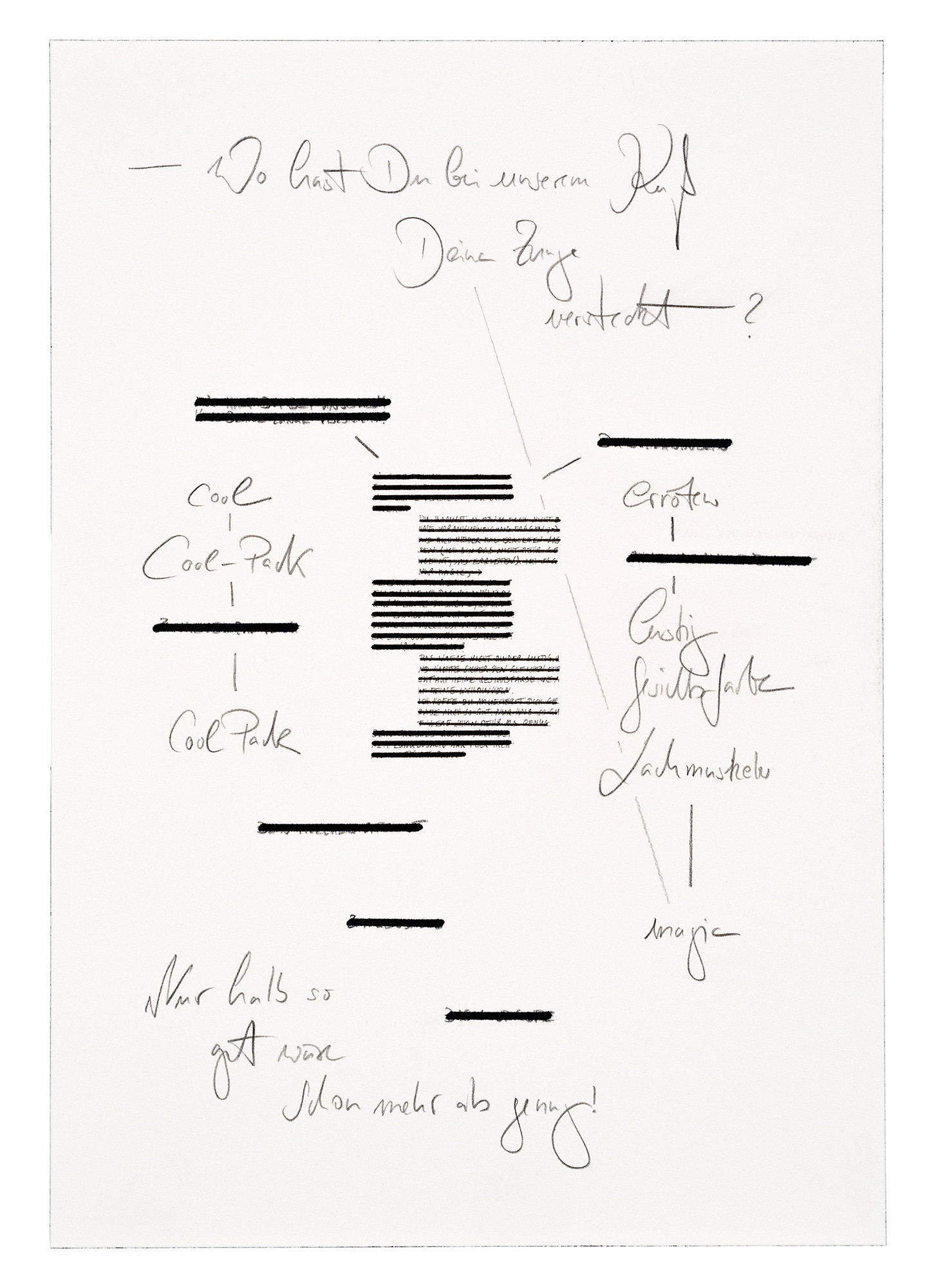
inc and pencil on paper, 26 x 18 cm
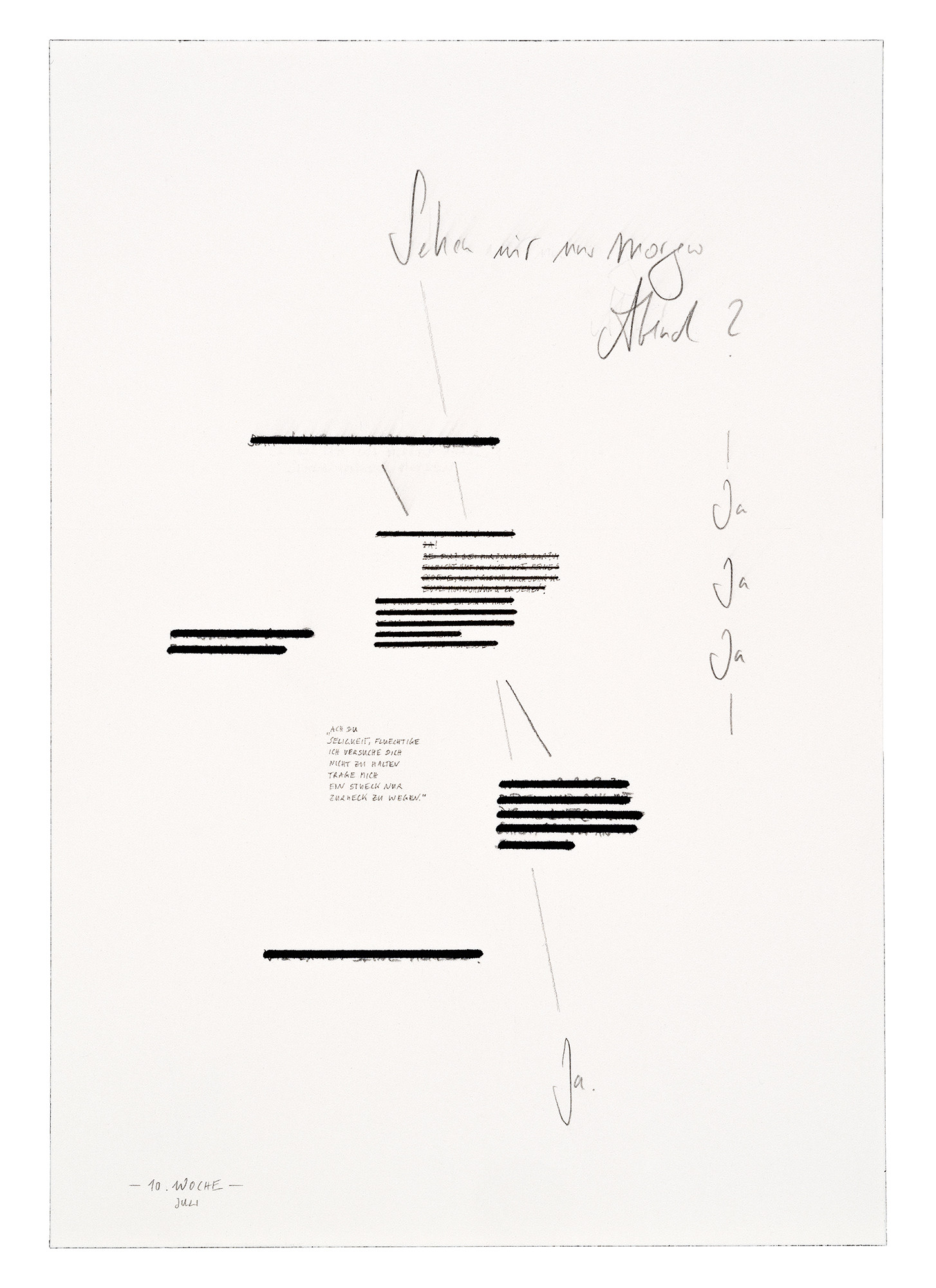
inc and pencil on paper, 26 x 18 cm
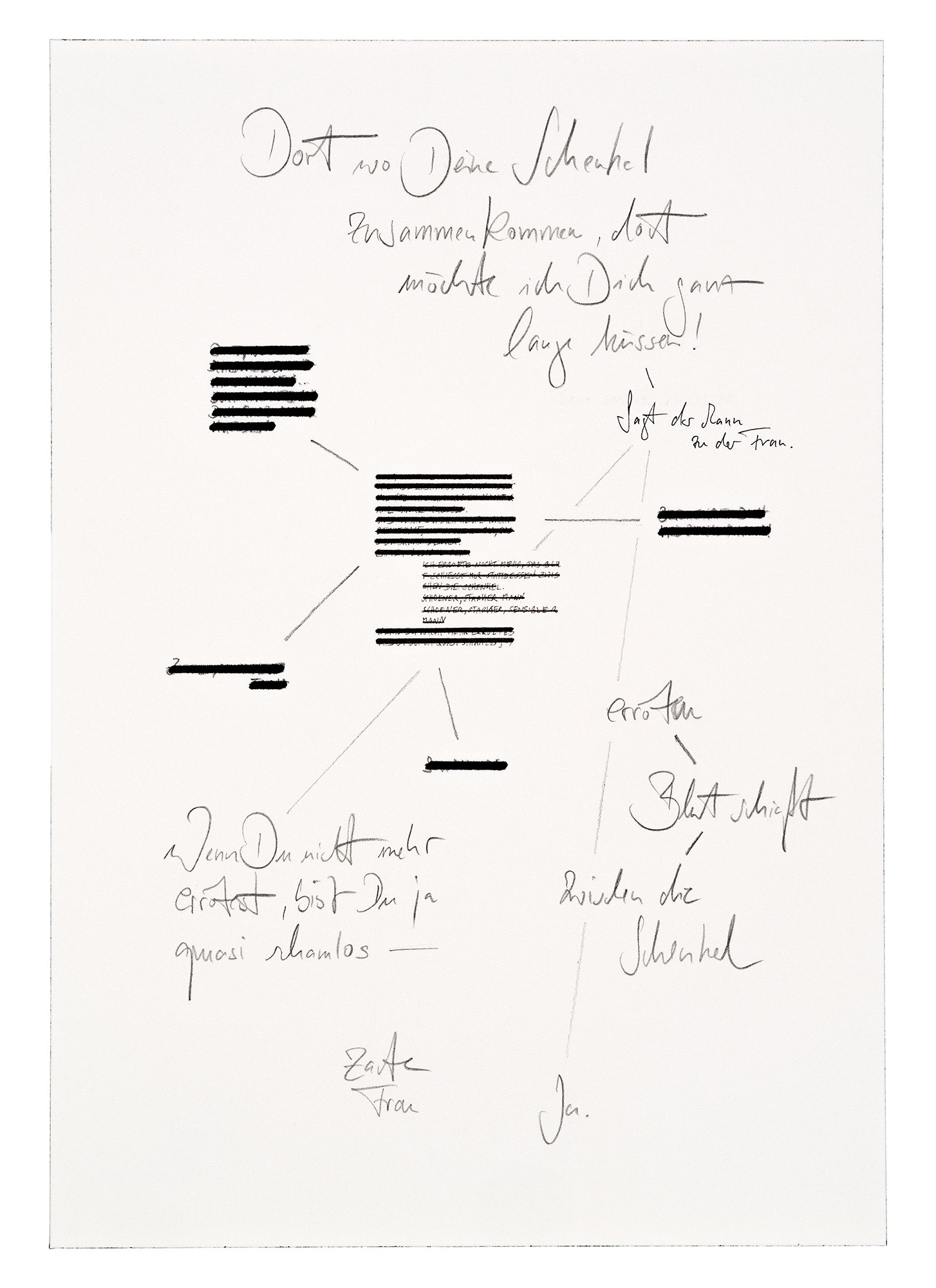
inc and pencil on paper, 26 x 18 cm

inc and pencil on paper, 26 x 18 cm
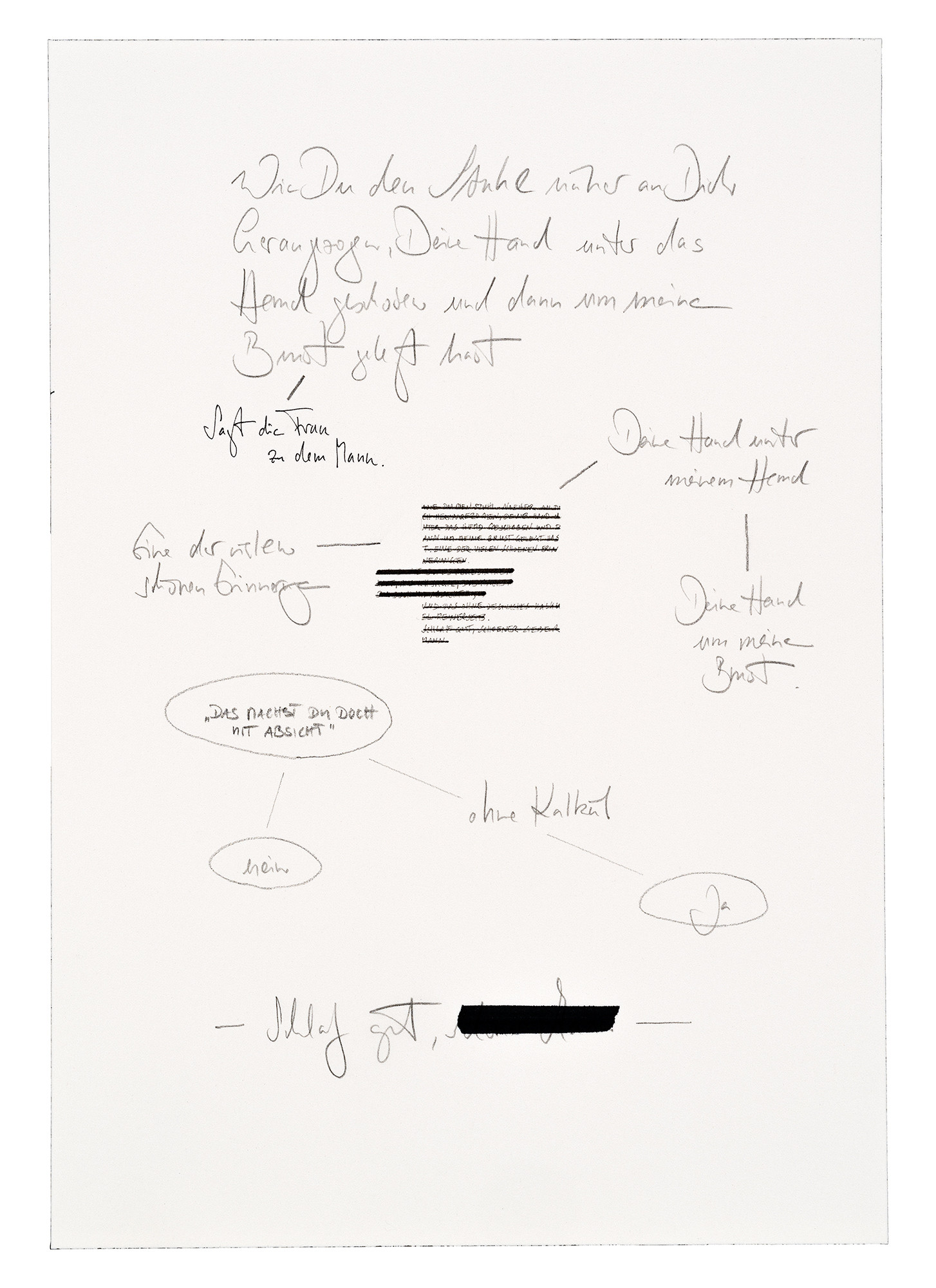
inc and pencil on paper, 26 x 18 cm
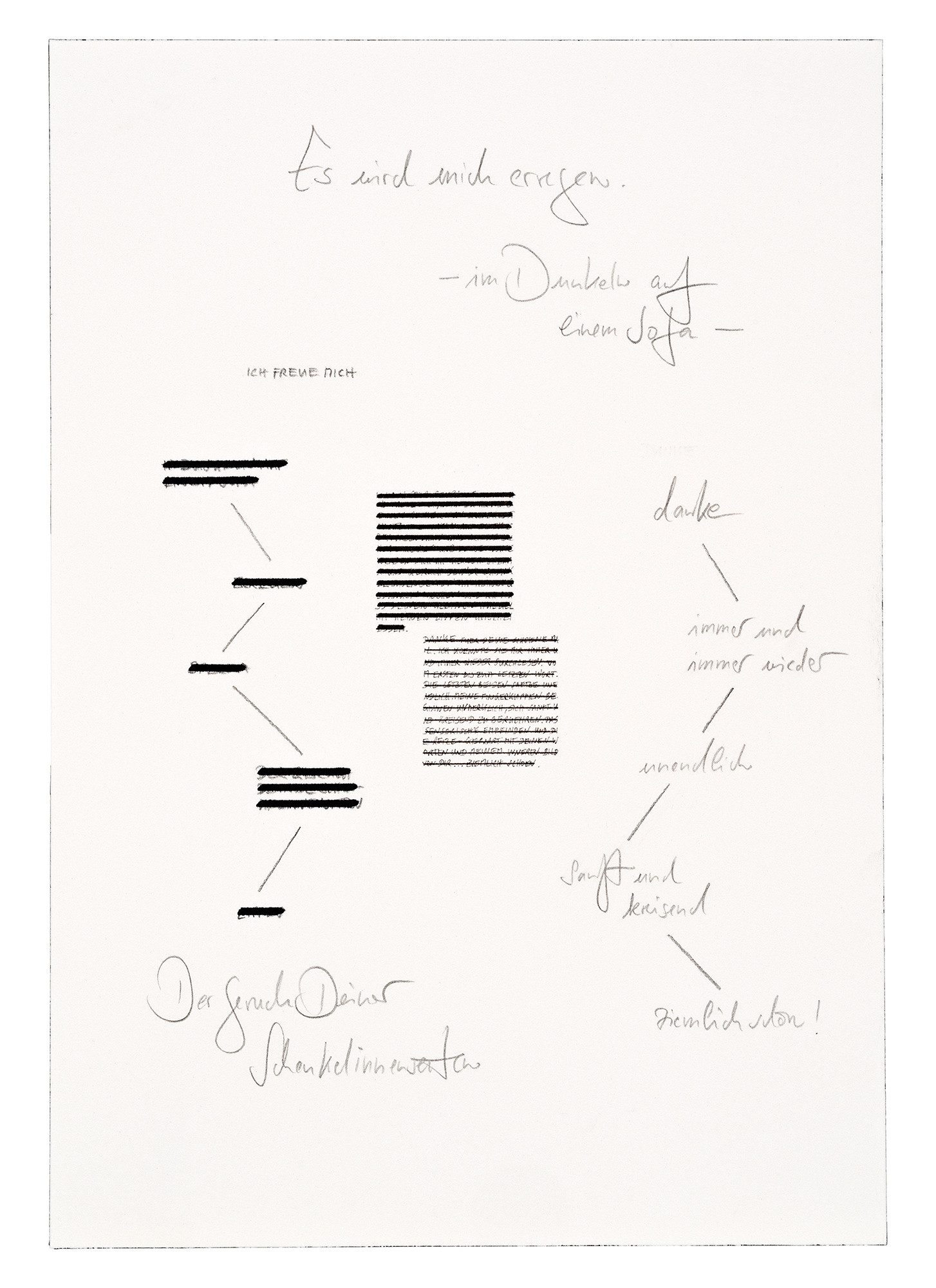
inc and pencil on paper, 26 x 18 cm
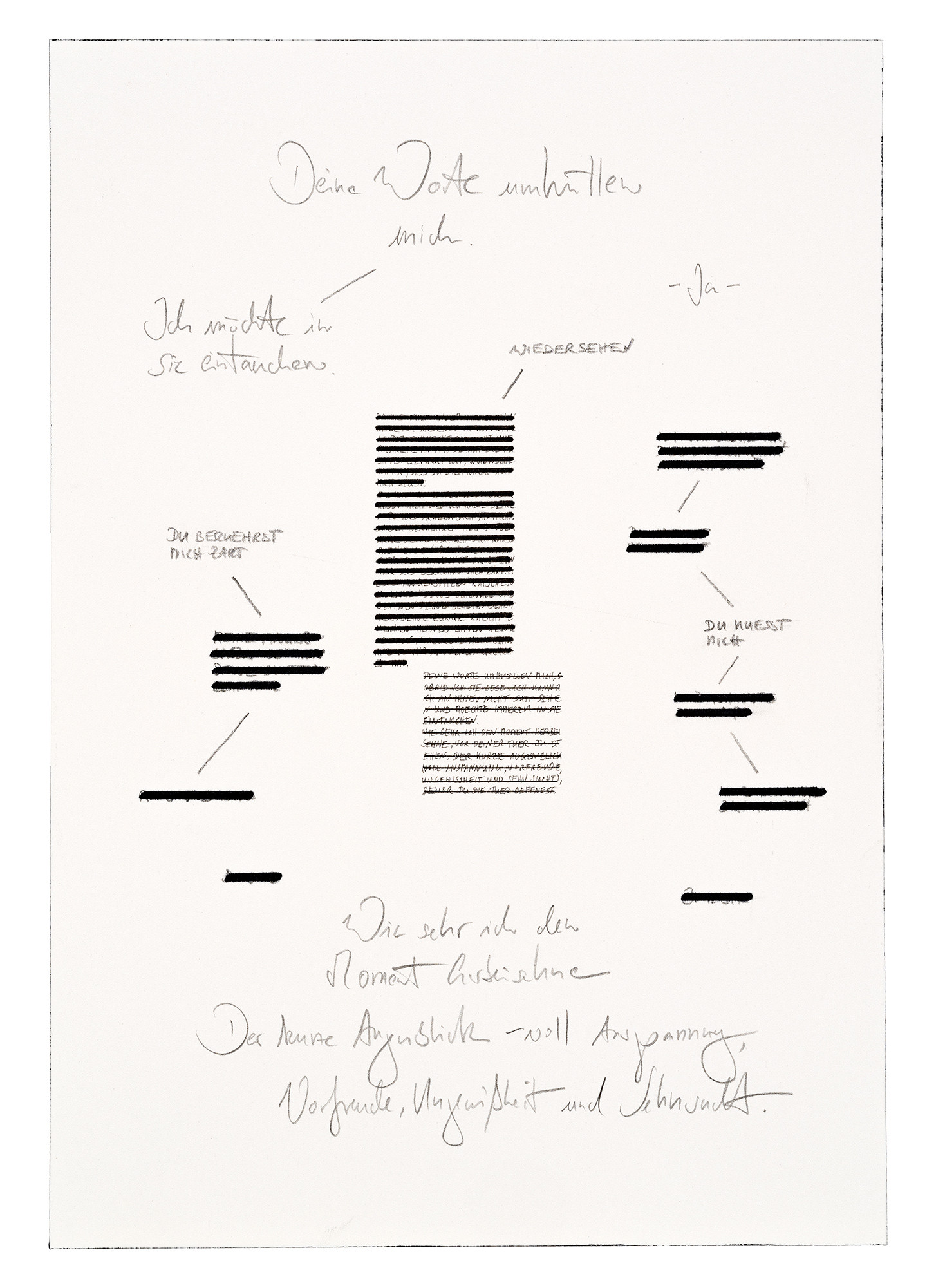
inc and pencil on paper, 26 x 18 cm
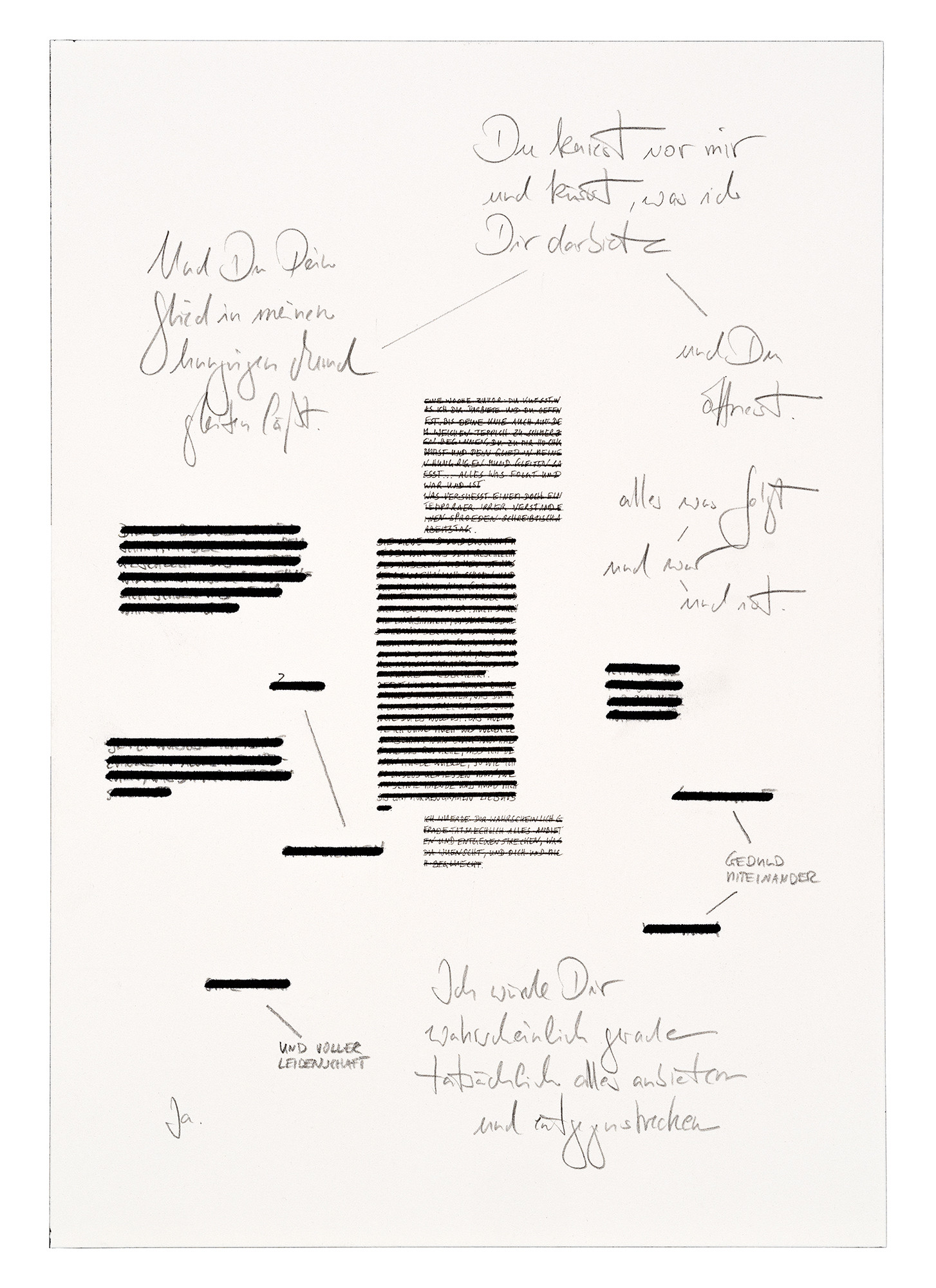
inc and pencil on paper, 26 x 18 cm
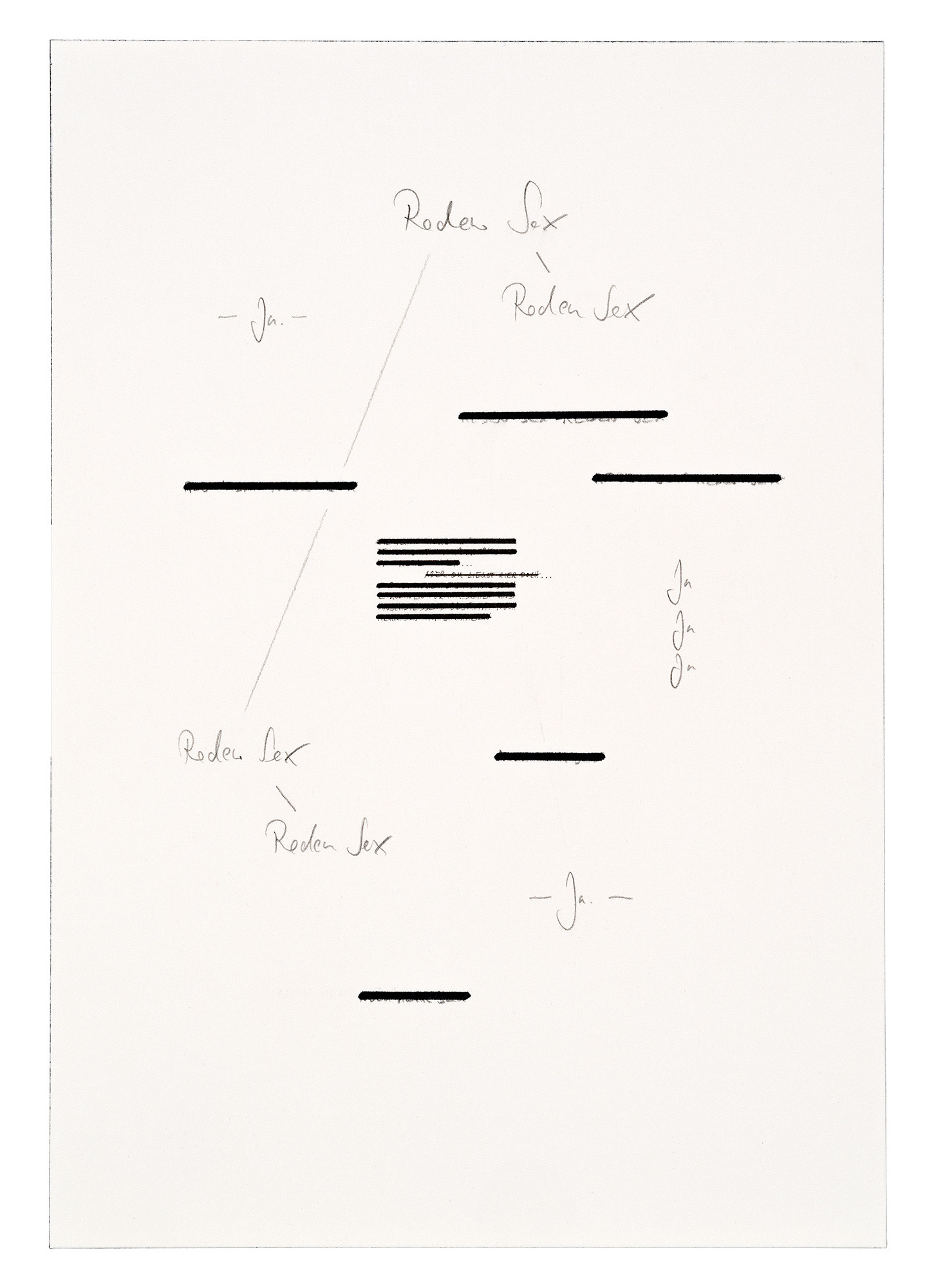
inc and pencil on paper, 26 x 18 cm
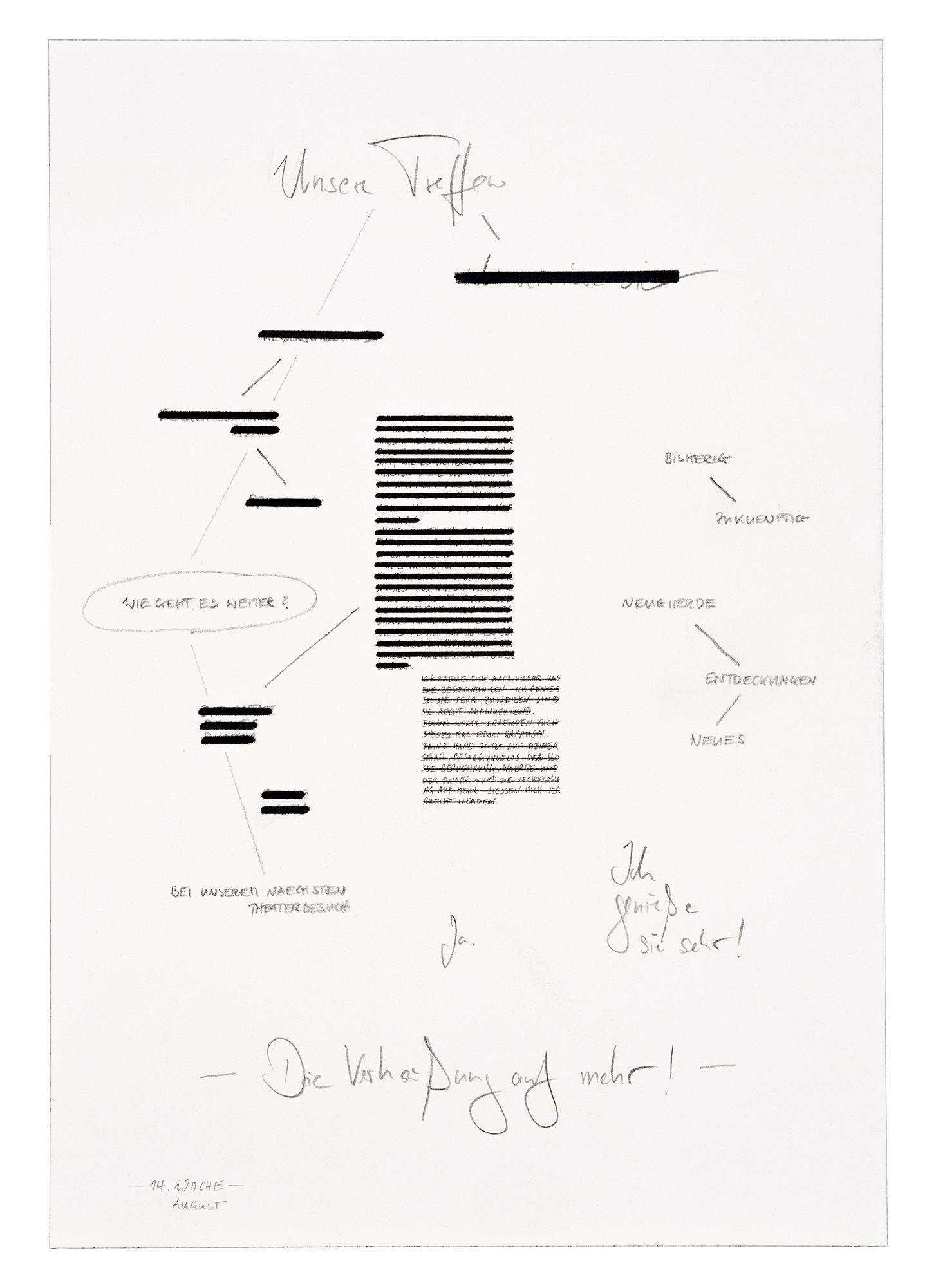
inc and pencil on paper, 26 x 18 cm
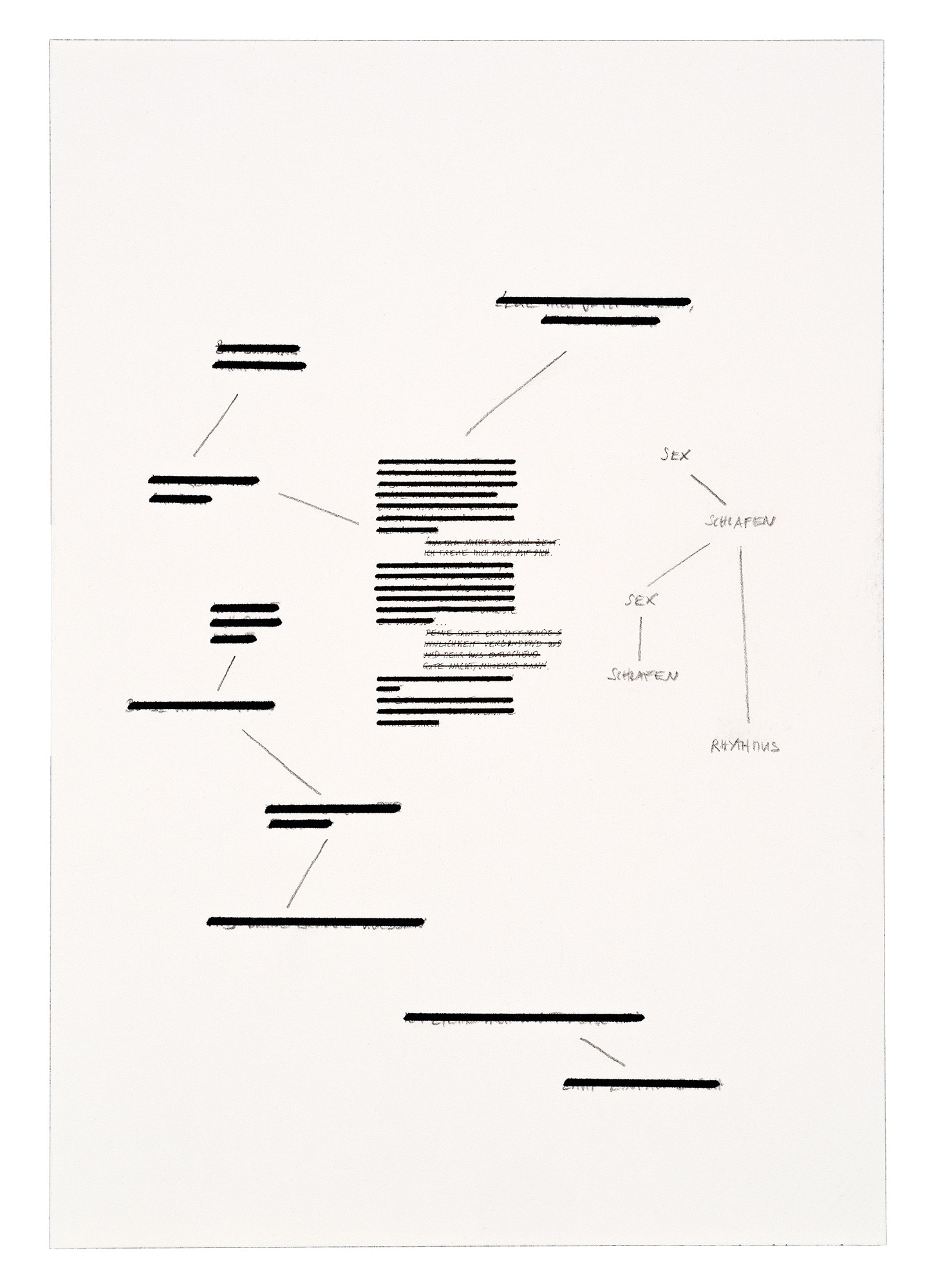
inc and pencil on paper, 26 x 18 cm
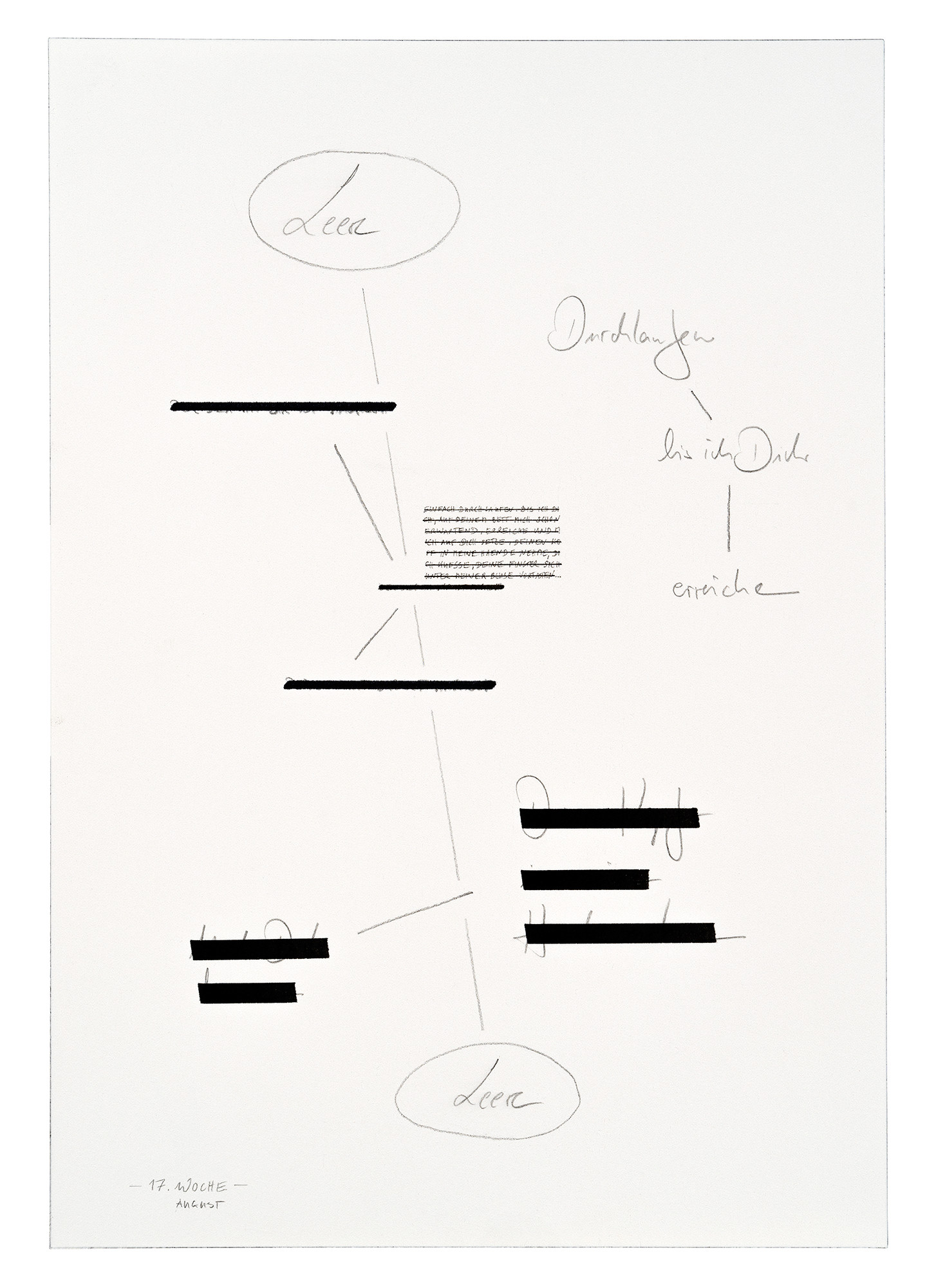
inc and pencil on paper, 26 x 18 cm
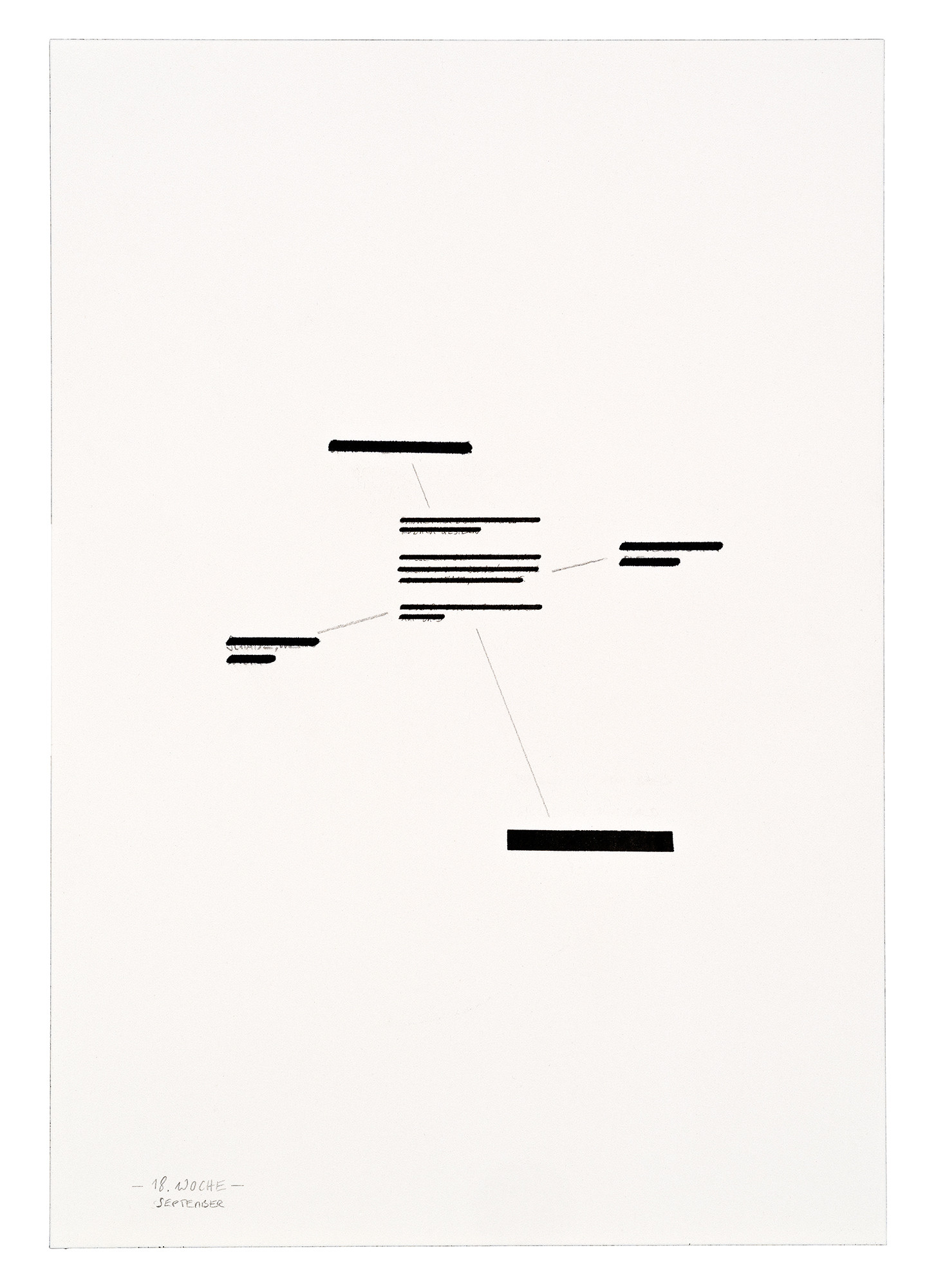
inc and pencil on paper, 26 x 18 cm

inc and pencil on paper, 26 x 18 cm
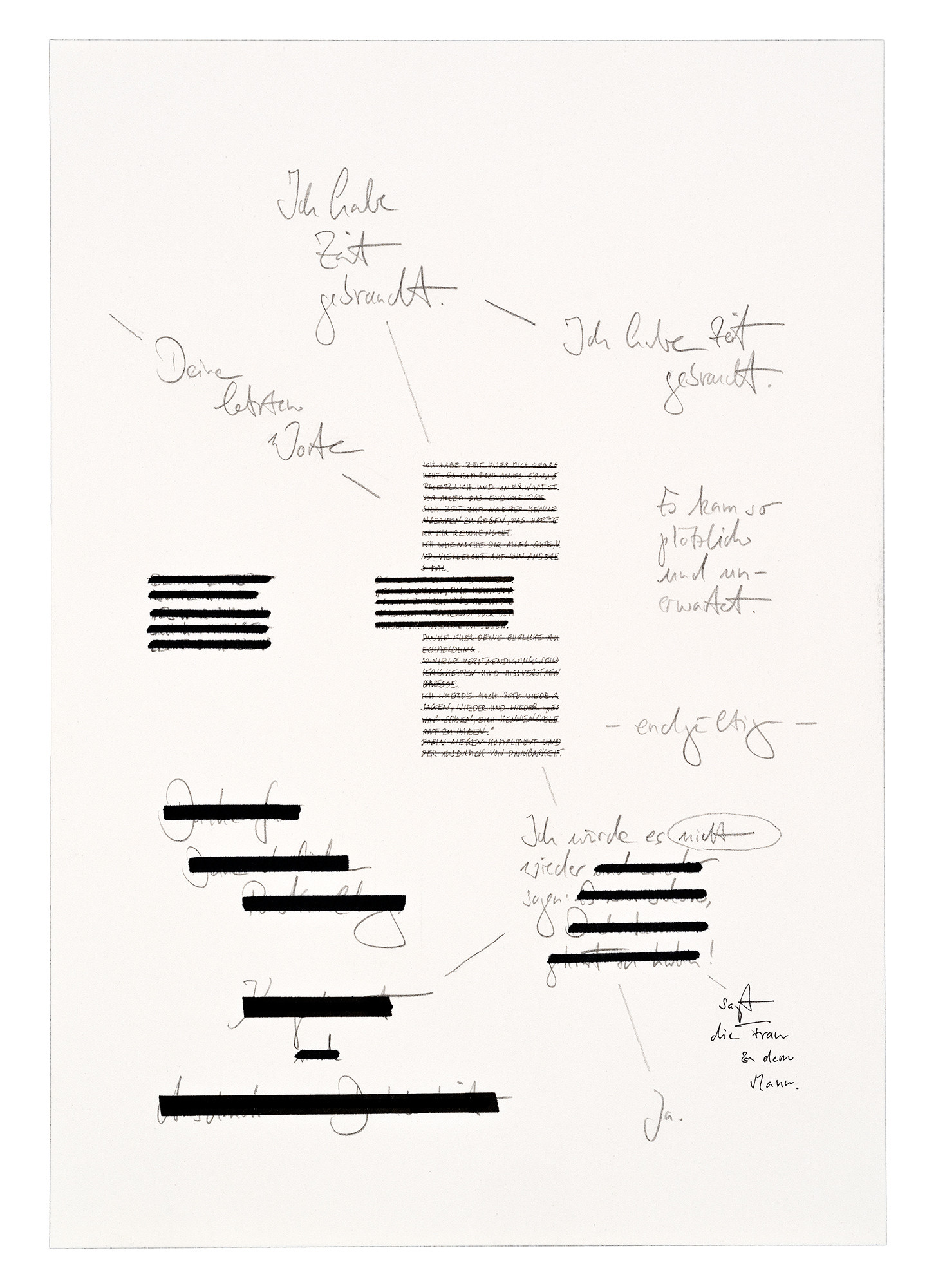
inc and pencil on paper, 26 x 18 cm
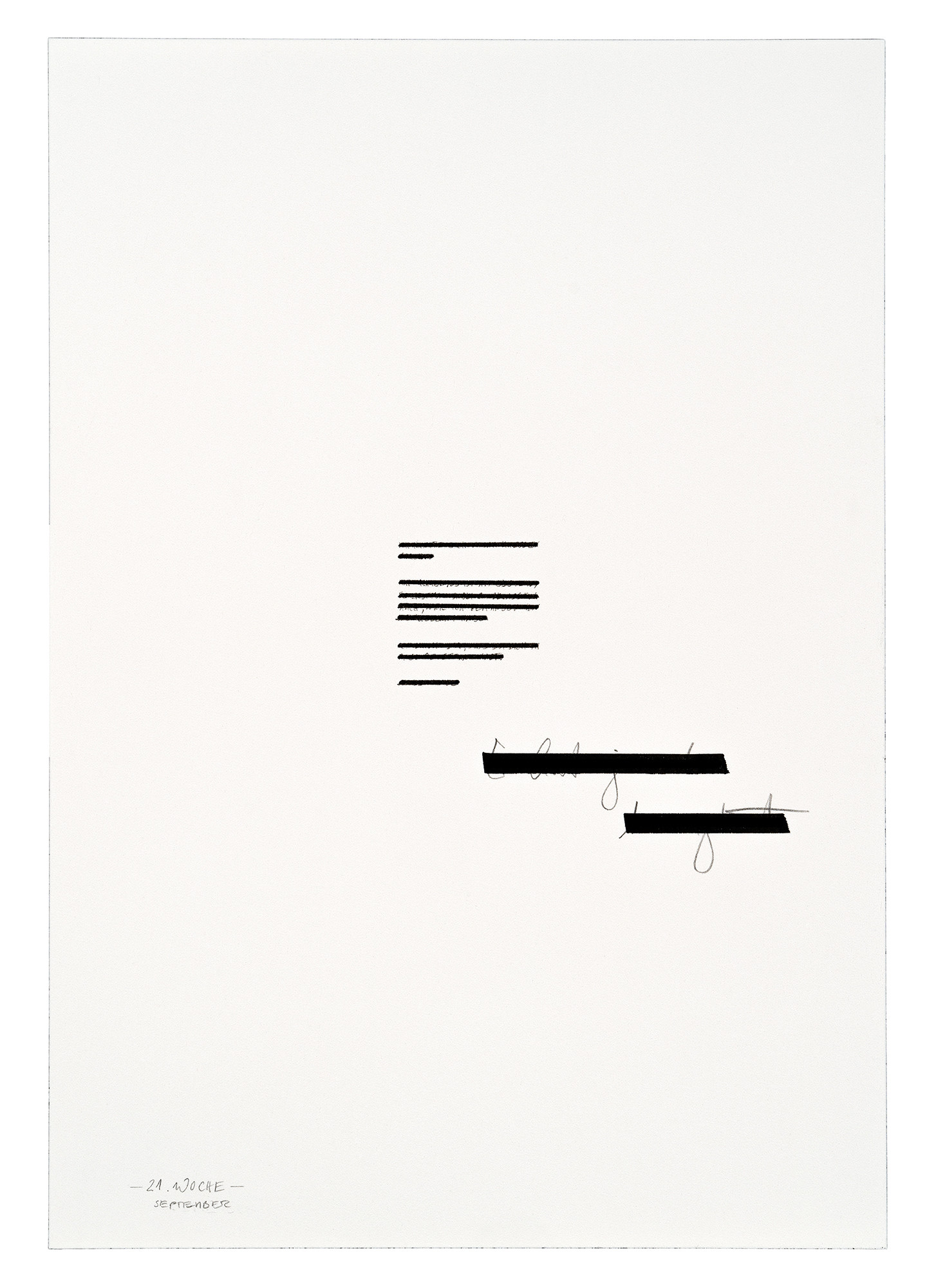
inc and pencil on paper, 26 x 18 cm
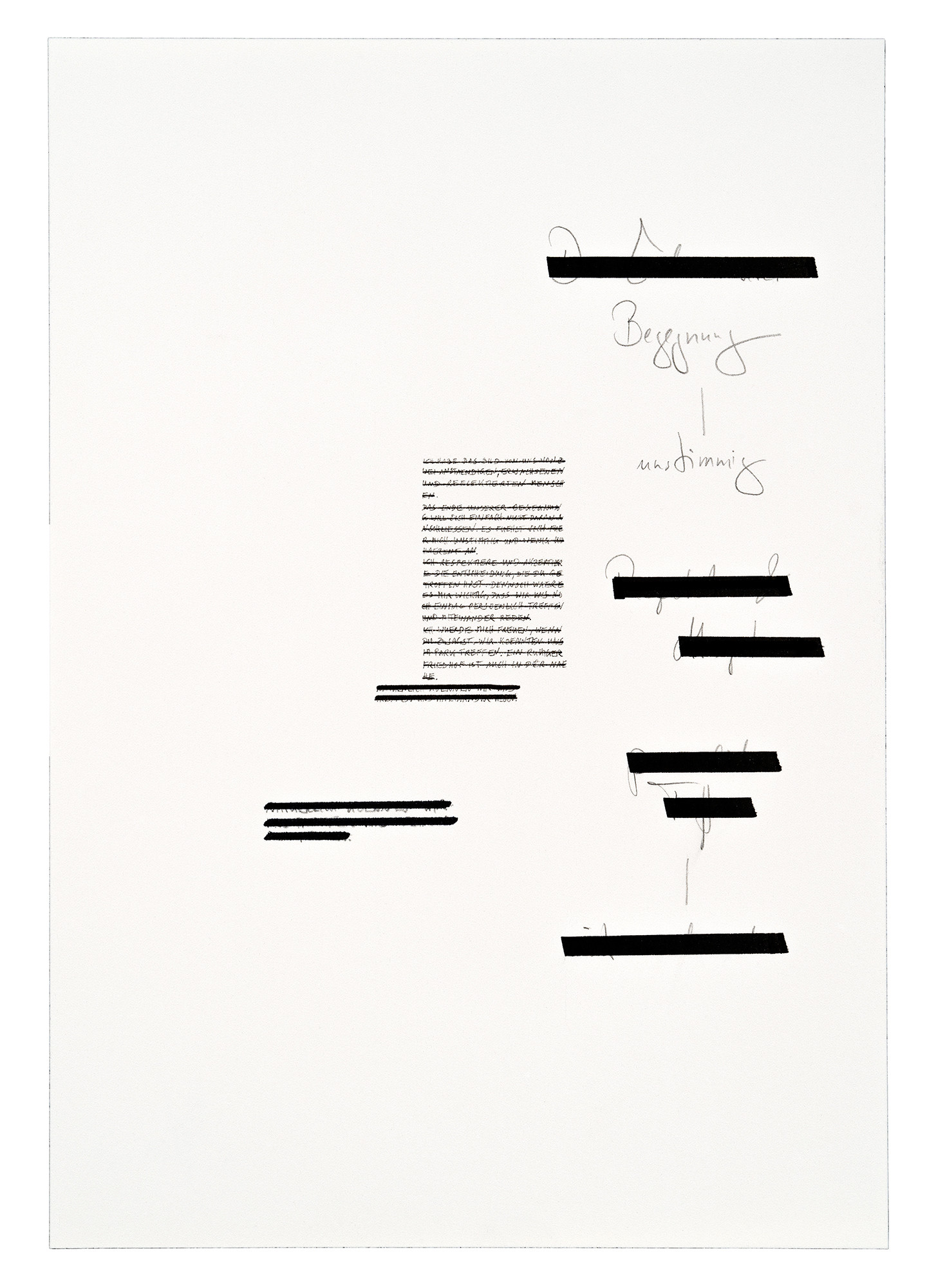
inc and pencil on paper, 26 x 18 cm
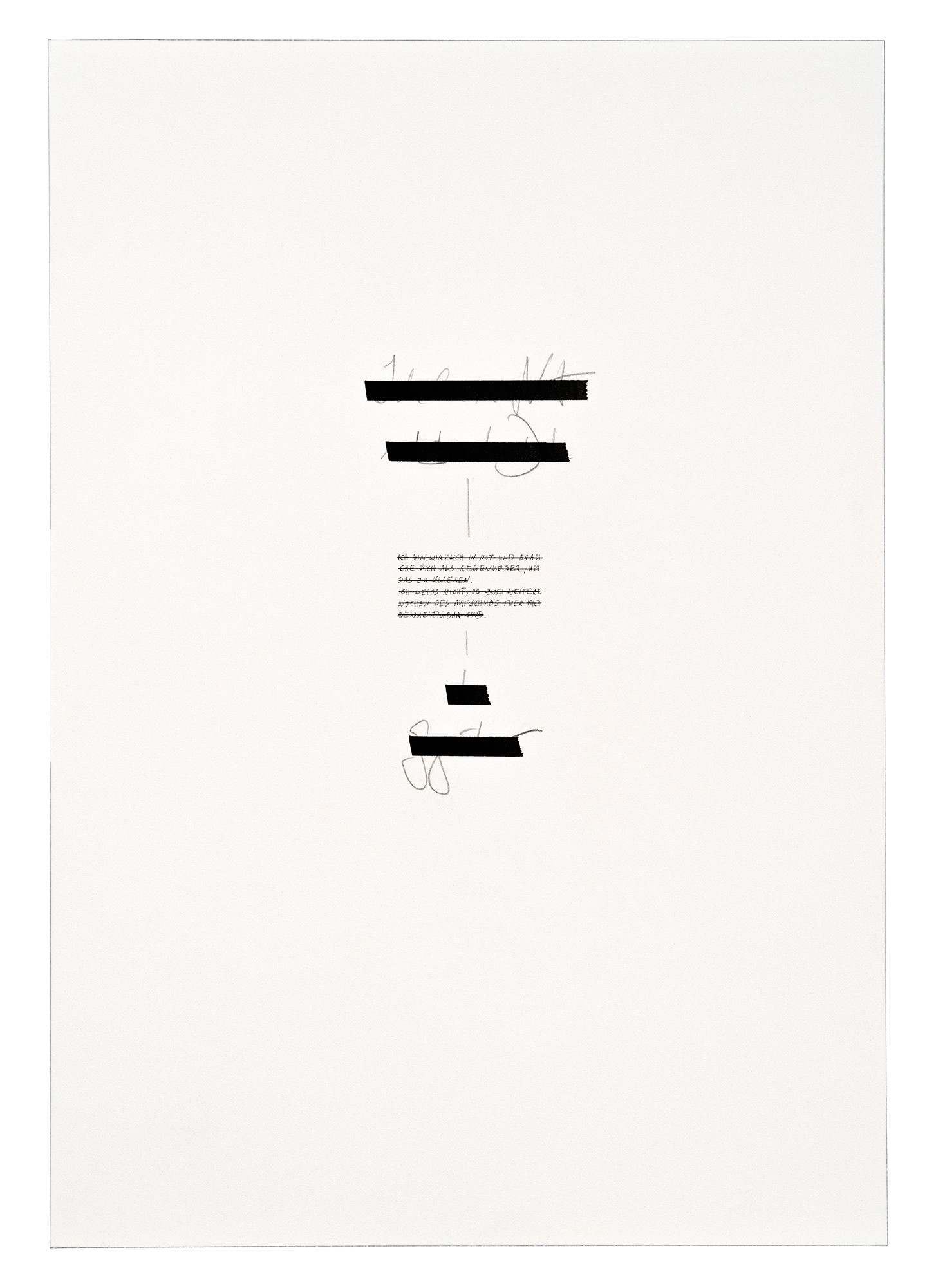
inc and pencil on paper, 26 x 18 cm
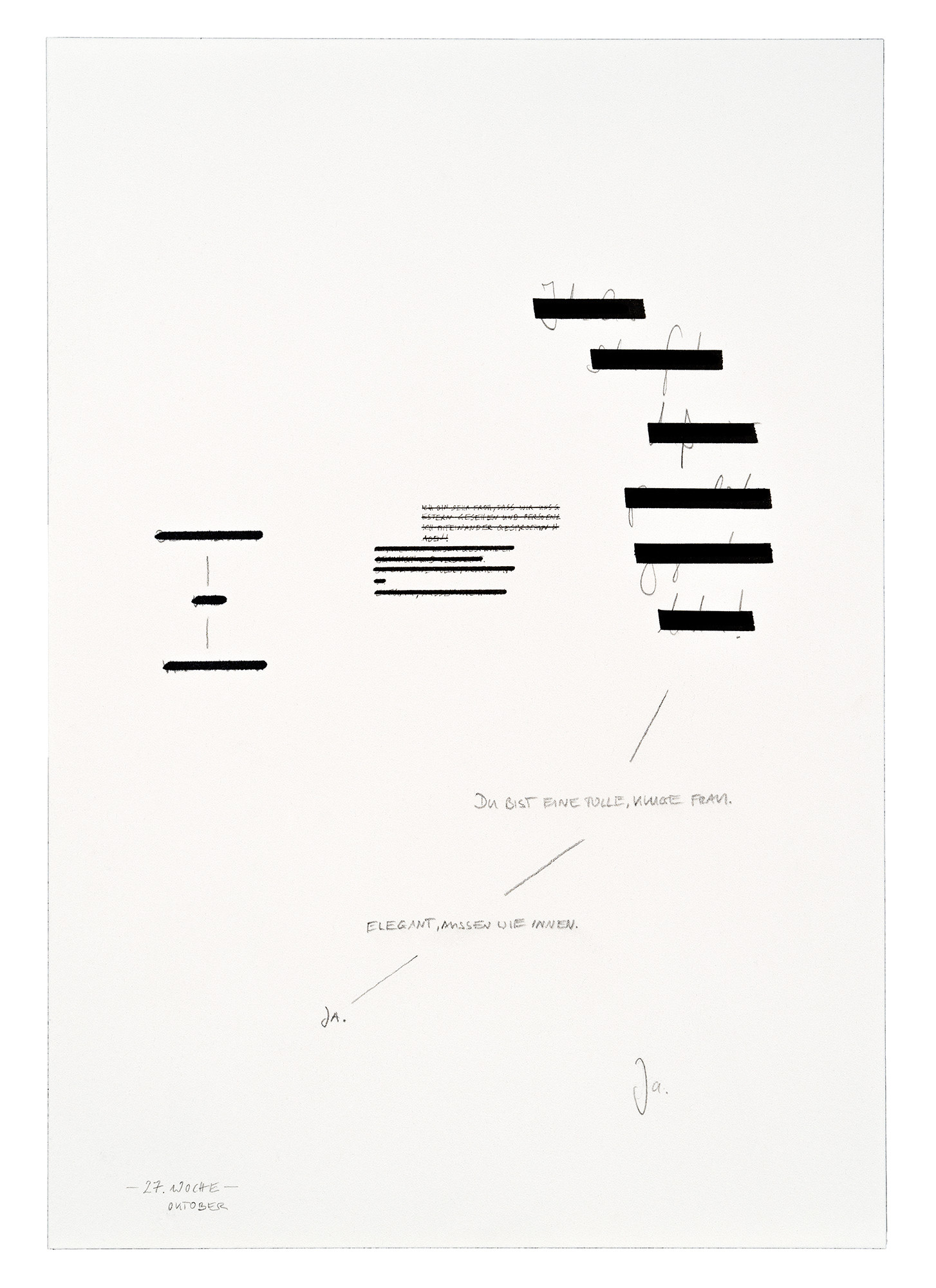
inc and pencil on paper, 26 x 18 cm
o.T. (Korrekturen III)
This is the third and final part of the series "Untitled (Corrections I - III) 2023-2025." It deals with an interpersonal encounter and its development over time. The different layers of writing symbolize the two characters in the narrative. Starting with a fragmentary communication between two people, written in fine, 1mm-high ink script in the center of the page, the series unfolds their story as a couple in love. Their communication is blacked out to varying degrees. Around this center are further quotations written in pencil. The man's quotations are in print, the woman's in cursive. They are sometimes linked together. For the most part, the man's texts are crossed out in deep black, thus rendering them unrecognizable. Many of the woman's texts are also crossed out. In their place, this series adds objective, descriptive comments from a neutral person.
Crossing out the written texts again has a Its protective yet destructive character is also at play. Furthermore, this act oscillates between delicate sensitivity and rigorous harshness.
In addition to exploring interpersonal relationships, this series addresses the question of how far my personal information and that of others, such as written material, may be incorporated into the work to visualize the theme. How and by what means am I, as an artist, permitted to use the life and work of others? Where does the transformation of one text into another begin, when is it plagiarism, and when is it an independent new work?
The work consists of three series, untitled (Corrections I–III), each with 21 drawings.
o.T. (Korrekturen III)
Dies ist der dritte und finale Teil der Serie „o.T. (Korrekturen I - III) 2023- 2025. Es geht um eine zwischenmenschliche Be- gegnung und deren Entwicklung im Laufe der Zeit. Die verschiedenen Schriftebenen sympolisieren die zwei Charaktere der Erzählung. Ausgehend von einer Kommunikation zwischen zwei Personen, die fragmentarisch in 1mm hoher, feiner Schrift mit Tusche in das Zentrum des Blattes gesetzt ist, wird im Verlauf der Serie deren Geschichte als Liebespaar erzählt. Deren Kom- munikation wird zu unterschiedlichen Graden geschwärzt. Um dieses Zentrum herum stehen in Bleistift geschriebenen wei- tere Zitate. In Druckschrift die Zitate des Mannes, in Schreibschrift die der Frau. Zum Teil werden sie miteinander verbunden. Größtenteils sind die Texte des Mannes tiefschwarz durchgestrichen, und somit unkenntlich gemacht. Auch die der Frau sind zu vielen Teilen durchgestrichen. Dafür werden in dieser Serie sachlich beschreibende Kommentare einer neutralen Person hinzugefügt.
Die geschriebenen Texte wieder durchzustreichen hat einen schützenden wie auch auslöschenden Charakter. Zudem chan- giert dieser Akt zwischen feinfühliger Zartheit und rigoroser Härte
Neben der Auseinandersetzung mit zwischenmenschlichen Beziehungen thematisiere ich in dieser Serie die Frage, inwieweit meine persönlichen Informationen und die anderer Personen, wie beispielsweise schriftliches Material, in die Arbeit einflie- ßen dürfen, um das Thema zu visualisieren. Wie und mit welchen Mitteln darf ich als Künstlerin das Leben und Werk anderer Menschen benutzen? Wo beginnt die Verwandlung von einem Text in einen neuen, wann ist es Plagiat und wann ein eigen- ständiges neues Werk?
Die Arbeit besteht aus drei Serien, o.T. (Korrekturen I - III), mit je 21 Motiven.